- Emerging research warns that the ocean, its shores, and the tropics will bear the brunt of consequences caused by global warming and overexploitation — set to double by 2050 if there is no policy intervention.
- Another paper reveals the success of marine protected areas (MPAs) that were largely not disturbed by fishing vessels — proving the effectiveness of such interventions.
- Meanwhile, other researchers say that as the ocean requires various kinds of protection for animals, waters, forests, etc., it risks further harm. This is because the pace of innovation is faster than the pace of regulation, monitoring, and long-term evaluation of their impacts, calling for stronger governance.
- On another successful note, the World Trade Organization (WTO) has recenlty mandated that countries stop supporting unsustainable fishing.
Global protection against illegal and overexploitation of ocean fishes
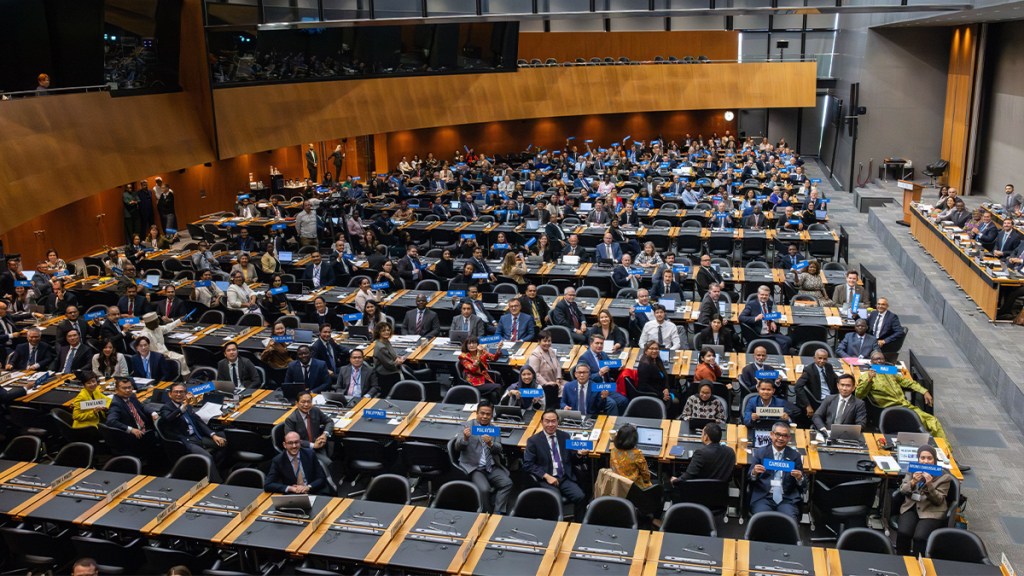
The WTO has adopted the Agreement on Fisheries Subsidies, which bans government support of illegal fishing and overexploitation. Contributing to marine protection, the agreement has entered into force, also protecting the livelihoods of people who depend on fisheries.
“At a time when the international trading system faces profound challenges, the Agreement on Fisheries Subsidies sends a powerful signal that WTO members can work together in a spirit of cooperation and shared responsibility to deliver solutions to global challenges,” comments Director-General Ngozi Okonjo-Iweala.
“The entry into force of this Agreement stands as a reminder that many of the biggest challenges we face are more effectively addressed at the multilateral level. People and nations need a multilateralism that delivers, which is why today is so reassuring.”
According to the UN Food and Agriculture Organization data, in 2021, 35.5% of global fish stocks were overfished compared to 10% in 1974. Approximately, subsidies worth US$35 billion contribute to fishing activities anually — of which US$22 billion are harmful, the WTO warns.
A recent paper reveals the consequences of overexploitation, with the case of cod. The publication in Science Advances reveals that cod used to be giants, however, due to a collapse of its stock, it now fits into a standard dish plate. “Selective overexploitation has altered the genome of Eastern Baltic cod,” explains first author Dr Kwi Young Han, a biologist who completed her PhD in the Marine Evolutionary Ecology group at Helmholtz Centre for Ocean Research Kiel.
“We see this in the significant decline in average size, which we could link to reduced growth rates. For the first time in a fully marine species, we have provided evidence of evolutionary changes in the genomes of a fish population subjected to intense exploitation, which has pushed the population to the brink of collapse.”
“Our results demonstrate the profound impact of human activities on wild populations, even at the level of their DNA,” adds Han. “They also highlight that sustainable fisheries are not only an economic issue but also a matter of conserving biodiversity, including genetic resources.”
Ocean protection projects shoot up, but risk harm without robust governance
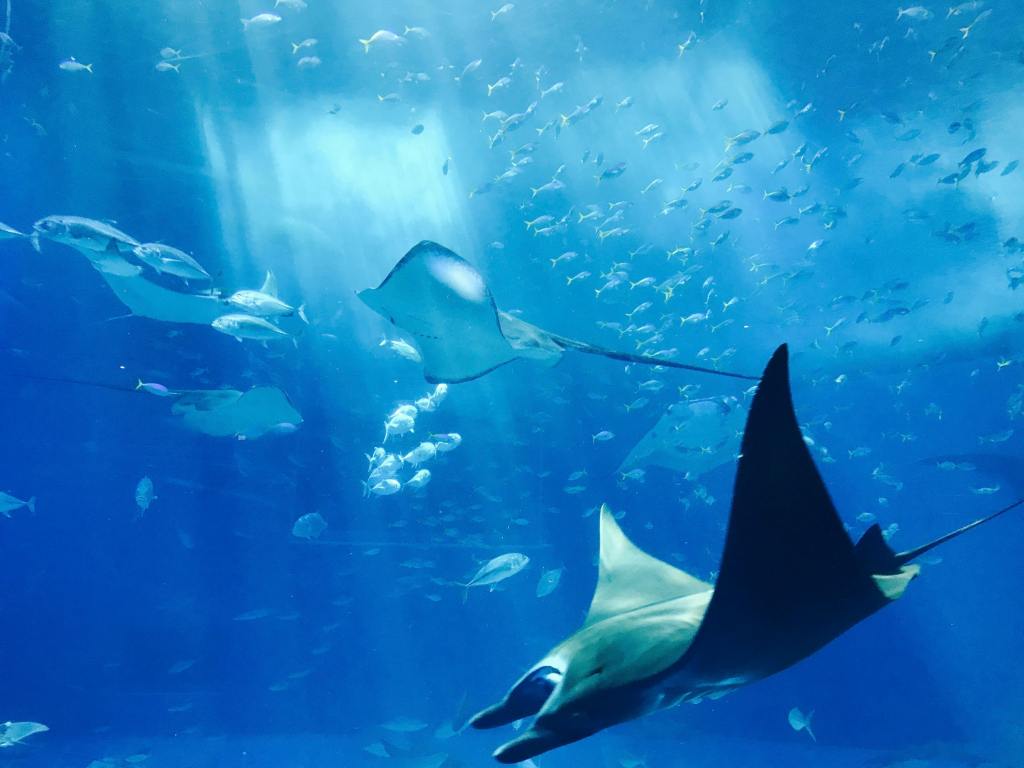
As climate interventions for ocean protection accelerate, new research warns that they can do more harm without responsible governance. Published in Science, the review highlights positive initiatives such as making the ocean less acidic, breeding climate-resilient corals, farming seaweed, and restoring mangroves.
However, lead author professor Tiffany Morrison at the University of Melbourne, Australia, warns that while these projects offer hope, they also carry significant risks. “Without robust governance, we risk repeating past mistakes—implementing solutions that are ineffective, inequitable, or even harmful.”
“The pace of innovation is outstripping our ability to regulate, monitor, and evaluate these interventions responsibly.”
“Private and nonprofit funding is accelerating the ambition. In 2020 alone, philanthropists had allocated US$160 million to oceanic climate action, with another US$250 million announced at COP28 in 2023 for a new global Ocean Resilience and Climate Alliance.”
For responsible marine transformation, the researchers posit a governance approach that prioritises sustainability, equity, and adaptability. “It is vital we conduct rigorous, comparative studies to assess the climate benefits and risks of interventions, including their scalability and long-term viability,” adds Morrison.
Co-author professor Neil Adger at the University of Exeter, UK, comments that Indigenous peoples and local stakeholders must be involved to ensure their knowledge, values, and rights shape interventions.
“If interventions are proven viable, we must also develop and apply bioethical protocols that address not just animal welfare but broader ecological and societal implications of upscaled deployment.”
Impact on oceans may double by 2050 without protective policies
Other recent research has emerged, calling for urgent interventions due to ocean warming and biomass loss due to fisheries—the main contributors to a detrimental future. Other factors include sea level rise, acidification, and nutrient pollution.
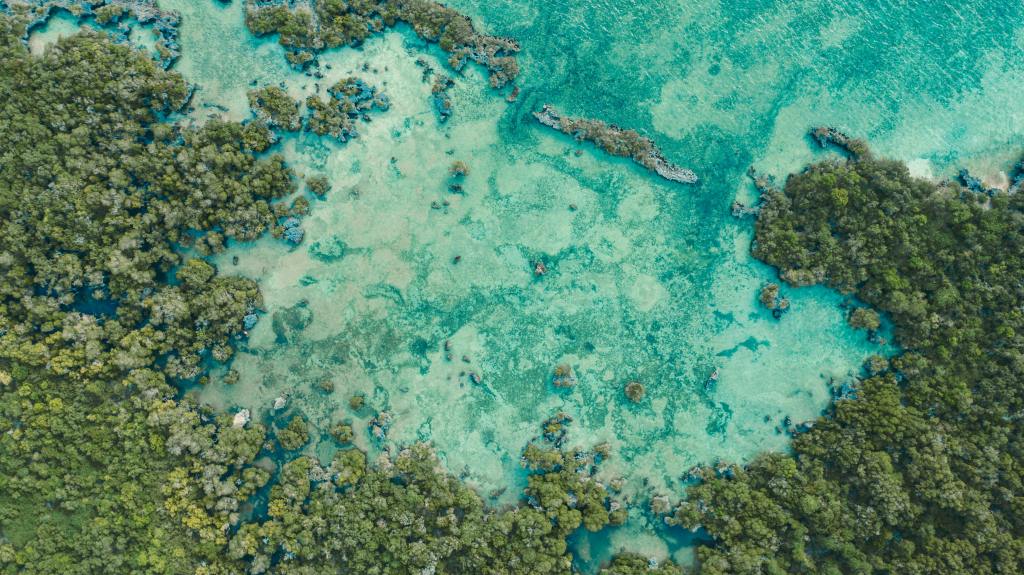
The publication in Science urges the prioritisation of habitat management, which is expected to be heavily impacted, such as salt marshes and mangroves.
Researchers at the US National Center for Ecological Analysis and Synthesis (NCEAS), UC Santa Barbara, warn that climate and human pressure will cumulatively impact the ocean, with the tropics and the poles’ coasts bearing the brunt.
“Our cumulative impact on the oceans, which is already substantial, is going to double by 2050—in just 25 years,” says marine ecologist and NCEAS director Ben Halpern, who led the effort to forecast the future state of marine environments.
“It’s sobering. And it’s unexpected, not because impacts will be increasing—that is not surprising—but because they will be increasing so much, so fast.”
He is concerned with people’s pervasive idea that the ocean is so large, so human impacts could not be that bad. Alarmingly, his team found that no place was untouched by human activity — 41% of the world’s marine environments were heavily impacted.
The paper warns that at the rate of harm caused to the ocean, future impacts “may exceed the capacity of ecosystems to cope with environmental change.”
“Being able to look into the future is a super powerful planning tool,” notes Halpern. “We can still alter that future; this paper is a warning, not a prescription.”
Tech analysis reveals success of mpaS
While several researchers are calling for effective ocean protection policies, another recent paper finds satellite imagery and AI-based evidence that highly protected MPAs effectively deter illegal fishing.
The publication in Science shows that 78.5% of the 1,380 MPAs studied had no commercial fishing activity, based on detecting technologies of untraceable vessels.
Where illegal fishing was detected among MPAs, 82% of them averaged less than 24 hours of activity per calendar year.
MPAs with high protection had nine times fewer fishing vessels per square kilometre than unprotected coastal areas on average, the researchers find.
However, strictly protected MPAs with significant fishing activity occurred in the Chagos Marine Reserve, the South Georgia and South Sandwich Islands and the Great Barrier Reef Marine Park (combined with the Great Barrier Reef Coast Marine Park), each with approximately 900 hours annually.
“Because strictly protected marine areas discourage illegal fishing, fishes are far more abundant within their boundaries, they produce many more babies, and help replenish surrounding areas,” says study co-author Enric Sala, National Geographic Explorer in Residence and founder of Pristine Seas. “In other words, the fishing industry benefits from following the rules.”
“Illegal fishing takes place in areas of the ocean set aside for protection, but using satellites we have found—for the first time ever—that the level of protection determines how much risk industrial fishers are willing to take on,” Sala remarked. “Fully and highly marine protected areas discourage illegal fishing. The stricter the rules in place to conserve ocean areas, the more benefits nations receive — including more fish to be caught outside protected areas’ boundaries.”
Co-author Juan Mayorga, a scientist with Pristine Seas, adds, “The ocean is no longer too big to watch. With cutting-edge satellites and AI, we’re making illegal fishing visible and proving that strong marine protections work.”
MPAs are essential for ocean health, enabling ecosystems to bounce back from depletion. Research has proven that they improve local fishing, provide jobs and economic benefits, and build resilience against ocean warming.
Researchers used Automatic Identification Systems to analyse 5 billion vessels with satellite images from Synthetic Aperture Radar.
“No single dataset can solve the challenge of monitoring fishing activity at sea; each has its blind spots,” notes Mayorga. “But when we combine them, their power emerges. We are now much closer to the full picture of human activity across the ocean. That’s especially important in the crown jewels of the ocean — the world’s most strongly protected areas — where the stakes for enforcement and biodiversity are highest.”
Lead author Jennifer Raynor, professor of natural resource economics at UW–Madison, US, adds, “By using satellites to track fishing vessels, countries can predict the locations of illegal activities and target patrol efforts, saving both manpower and money.”
 Symbiotic Futures
Leave a comment