A two billion-year-old form of life brings insights into hydrogen gas use. Scientists posit the discovery for green hydrogen applications. But are there exploitation risks, and is a path toward a mutually beneficial relationship. Symbiotic Futures interviews Dr. Bob Leung, a scientist leading the research to bring clarity.
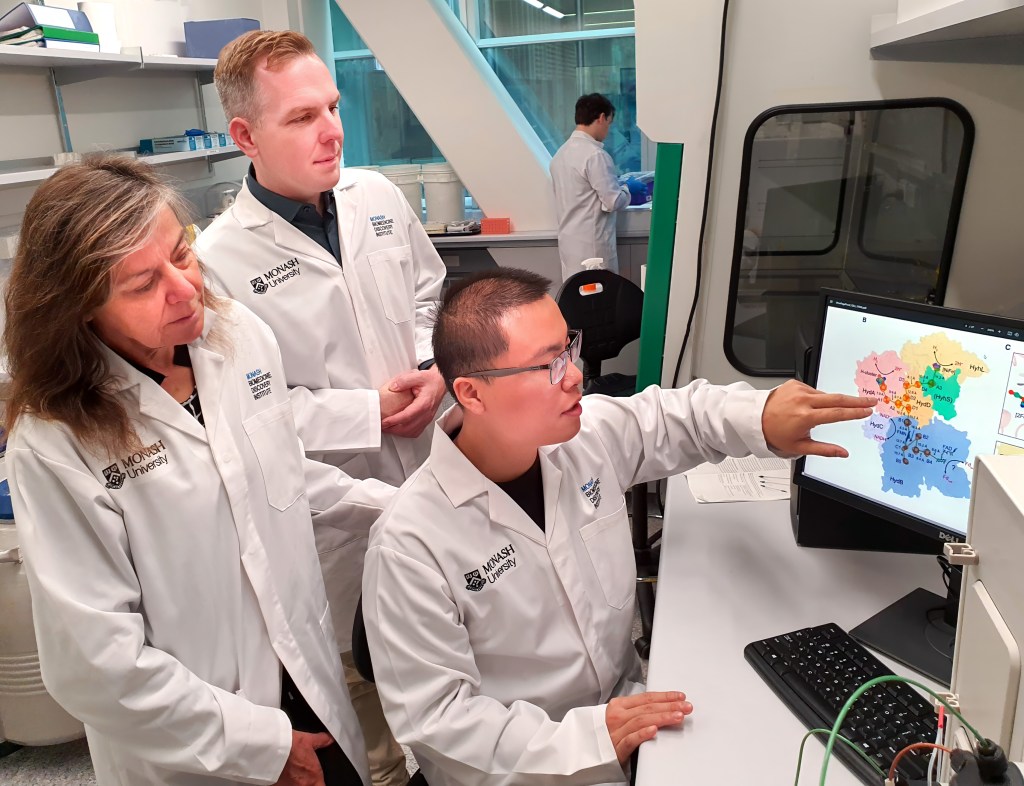
International scientists at Monash University, Australia, study how archaea make energy after consuming and producing hydrogen.
Published recently in Cell, the study on microbial ancestors to humans explains how their diet enables them to flourish within Earth’s most hostile environments. Monash University says the study researchers “rewrite the textbook on basic biology.”
Leung advocates using archaea’s process for a future green economy. “Humans have only recently begun to think about using hydrogen as a source of energy, but archaea have been doing it for a billion years.” Symbiotic Futures speaks to him to learn more about this organism:
Biotechnologists now have the opportunity to take inspiration from these archaea to produce hydrogen industrially — but what are the advantages of producing hydrogen this way, are there possible exploitation consequences?
The industry currently uses precious chemical catalysts such as platinum to produce hydrogen. But microbes such as archaea that we studied make some of the most streamlined and robust hydrogen-producing enzymes—the “hydrogenases.” These biological catalysts don’t require precious metal and are non-toxic. They also function highly efficiently and resiliently. This can serve as a scaffold for designing and improving artificial catalysts for more efficient and economical hydrogen production.
There will be no exploitation because we don’t harvest archaea directly from the environment. Rather, we learn from the structures and mechanisms of the hydrogenases they synthesize to improve industrial catalysts.
How can a symbiotic relationship between humans and archaea be formed?
Humans and archaea most typically share a neutral symbiotic relationship. A small proportion of archaea, known as “methanogens,” live in the human intestine. They are not known to cause any diseases or benefit humans.
Unlike in humans, methanogens are especially abundant and active in the gut of cattle. They eat hydrogen gas that occurs in the gut to produce the greenhouse gas methane, which is responsible for 32% of human-caused methane emissions. We’ve been developing strategies to inhibit them to increase the sustainability of the agricultural sector.
On the other hand, regarding symbiosis, indeed, all eukaryotes (including humans) evolved two billion years ago when an archaeal and a bacterial cell merged due to their symbiotic relationship.
The most widely accepted scientific theory, known as “the hydrogen hypothesis,” suggests that the merging of two cells allows them to exchange hydrogen gas more efficiently. A likely scenario is that the archaeal cell survived by making hydrogen, and the bacteria cell made energy by eating the gas produced by the former.
Eventually, this process gave rise to all eukaryotes after over a billion years of evolution. Most modern eukaryotes, including humans, have since lost the ability to use hydrogen. But the hallmarks of ancient archaea and bacteria still exist. In our cells, the organelle mitochondria are derived from the bacterial cell, and the cell body is from the archaea.
How might the conservation of biodiversity be ensured when the enzymes in archaea are harvested for industrial use? Will the extraction of archaea and its enzymes have an impact on its ecosystems?
We don’t harvest the enzymes directly from archaea for industrial use. There are two ways we can apply them.
The first is similar to what was mentioned before: we can learn from the structures and mechanisms of the hydrogenases they synthesise to improve industrial catalysts.
The second approach is to transfer the genetic blueprint of the enzymes in archaea to other microorganisms that we can grow in the laboratory, and use them to make the enzymes for industrial use.
Instead, the discovery and application of efficient enzymes from archaea emphasise that there is a wide diversity in this understudied and under-appreciated group of organisms.
Ancient Ancestor
Monash University explains the domains of life in the form of a pyramid, with eukaryotes, which include animals, plants, and fungi, on top, followed by bacteria and archaea, the single-celled organisms.
Eukaryotes evolved from an ancient lineage of archaea merging with a bacteria cell through exchanging hydrogen gas, which is a “widely accepted” theory.
“Our finding brings us a step closer to understanding how this crucial process gave rise to all eukaryotes, including humans,” comments Leung.
Third Form Joins Bacteria And Eukaryotes
The team analysed the genomes of thousands of archaea for hydrogen-producing enzymes and then produced the enzymes in the lab to study their characteristics. They discovered that some archaea use unusual types of enzymes called [FeFe]-hydrogenases.
The archaea that made these hydrogen-using enzymes were found in many of Earth’s harshest environments, including hot springs, oil reservoirs, and deep beneath the seafloor.
It was previously believed that these hydrogenases were exclusive to bacteria and eukaryotes. In this instance, the team has demonstrated their presence in archaea for the first time as well as their striking diversity in form and function.
Not only do archaea have the smallest hydrogen-using enzymes, but they also have the most complex hydrogen-using enzymes. Moreover, the paper reveals some have the smallest hydrogen-producing enzymes of any life form on Earth.
Researchers posit the discovery could bring solutions for industrially-produced biological hydrogen production in industrial settings. Professor Chris Greening said these discoveries into how archaea use hydrogen have potential applications for transitioning to a green economy.
“Industry currently uses precious chemical catalysts to use hydrogen. However, we know from nature that biological catalysts function can be highly efficient and resilient. Can we use these to improve the way that we use hydrogen?” he asks.
Interview article, written by Venya Patel
 Symbiotic Futures
Leave a comment